|

|
VIRTUALLY ALL COMPANIES have benefited directly from electronic
commerce. For more than a decade, EDI (electronic data interchange) systems
have taken much of the pain out of procurement and intercompany sales. Since
then, the Internet has flung the doors wide open for such varied companies as
SAP, Livemind, and IBM to create new solutions to the age-old problems of
commerce.
Although auctions have been making headlines in consumer publications, many
companies are failing to recognize the value that this timeless format could
offer for their daily operations. Not just for consumers to buy ugly green
lamps or for businesses to off-load Y2K T-shirts, auctions have become a big
boon to the savvy enterprise, expanding its reach into the market and
reducing the cost of needed goods and services.
Forrester Research projects that trading via auctions and exchanges will
increase 25-fold in the next five years, reaching $746 billion by 2004, with
computing and electronics items accounting for the largest share, followed by
utilities and motor vehicles. Many companies wonder when and why they should
use online auctions as part of their business trading strategy. The short
answer is, if you sell goods and services or if you purchase items to run
your business, online auctions can work for you.
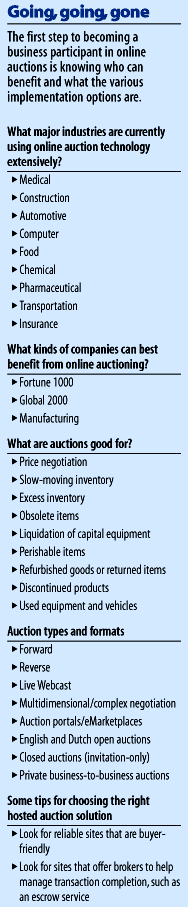
There are many reasons for a company to participate in online auctions, and
companies of practically any size and within any industry can benefit from
them. For instance, a company that is trying to field prices for a newly
manufactured product may wish to use an auction to help gauge interest and
determine pricing. Another may have excess or slow-moving inventory it would
like to be rid of, whereas others may want to recover dollars on used or
refurbished equipment. Of course, companies already taking advantage of
traditional, live auction -- in auction halls of warehouses, for example --
could benefit heavily by bringing them online.
Online auctions can greatly improve your global reach and decrease the time
it takes to move goods. Transactions can be completed quicker, reducing
transaction time from weeks to days.
Going
to e-market
Once you discover how compelling online auctions can be, the big question
becomes how to get started. Essentially, companies interested in auctioning
have two major choices. The first is to participate in an existing
e-marketplace where you can buy and sell items, a perfect option for
companies that auction sporadically. Or you may wish to create your own
dedicated auction site, such as Dell has done at www.dellauction.com.
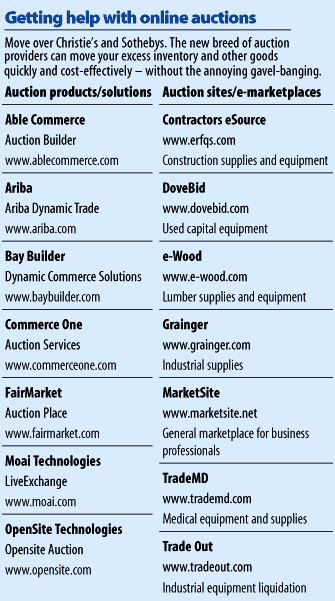
This can be accomplished by working with a company, such as Fairmarket or
Commerce One, that provides auction-building services or by building and
managing a site internally.
There are several e-marketplaces where a company can register and post items
they want to auction or browse for procurement items. There is no setup fee
for most of these services, nor is there hardware to purchase nor software to
install. All a company needs is a Web browser and, in most cases, digital
images of the items it wants to auction.
There are no up-front costs at most e-marketplaces; you pay a percentage of
your posted item's sale price when a transaction is completed. Commerce One's
MarketSite charges customers from 25 cents to $2.00 per transaction, based on
volume. Some sites, such as DoveBid, an auction marketplace for liquidating
used capital equipment, charge both a posting fee and a commission on sold
items.
Hosted
haggling
If you have a steady supply of things to sell or are interested in purchasing
goods more regularly, it may be time to think about having someone host a
site for you. Many small to midsize companies or those with minimal IT staff
are choosing a hosted solution to get into the auctioning world, as are large
companies that want to test the waters before beefing up their own IT
department in order to move auctioning in-house.
The biggest benefit of having hosted auctions is that companies will not need
to hire staff to maintain the auctions. Hosted solutions provide
around-the-clock support and maintenance of the system.
Furthermore, this route provides a faster implementation with fewer start-up
costs than building your own. A hosted model will cost in the neighborhood of
$50,000 and up; an in-house site will likely be twice that, at least $100,000
to get started.
On the downside, companies that choose hosted auctions will have far less
control over their sites and fewer integration options. As a business grows,
the primary reason for bringing a successful outsourced auction initiative
in-house is to gain more control and integration with internal organizational
systems such as procurement and ERP (enterprise resource planning).
If such integration is high on your priority list, be sure to consider
vendors such as Moai and Bay Builder. These companies offer both hosted and
installed versions of their auction solutions, so you don't have to invent
the wheel twice.
Buy
low, sell high
There are two main forms of online auctions: forward and reverse. In a
forward auction, multiple buyers compete to purchase items from a single
seller. Forward auctions can be used for almost any type of product or
service. They are suited ideally for liquidating excess inventory, used
equipment, and discontinued items and for testing pricing in an electronic
fashion.
The other model is called a reverse auction, in which multiple suppliers
compete for a buyer's business. This is great for one-time, large purchases.
For example, if you were looking for a new fleet of field vehicles, you would
submit an RFQ (request for quote) on the auction site. Various suppliers
would then compete to fulfill your request.
By holding competitive bidding events for their business, buyers leverage
their purchasing power and streamline the procurement process. Industries
that have been quick to adopt this technology include chemical,
pharmaceutical, transportation, insurance, and manufacturing, both high-tech
and traditional.
Companies that are already holding traditional (a la Sothebys) auctions also
could benefit greatly from online auctions. Online auctions can add value to
traditional auctions by dovetailing the auction activity with a Webcast,
extending the auction's audience reach.
DoveBid is one vendor that is making such Webcasting part of its core
services. DoveBid's Webcast auctions allow in-person auction attendees to
compete directly against online participants.
Webcast-style auctions can be quite expensive due to the necessary cost of an
on-site crew to install and manage the broadcasting equipment; therefore
these types of auction are best reserved for large-quantity and high-value
items. Boeing and Lockheed are good examples of companies using Webcast
auctions.
Dickering
tools
Perhaps the most compelling advance in online auctioning is the introduction
of negotiation tools. Negotiation tools automatically gather information
about add-on costs, such as shipping or tariffs, for a purchase under
consideration. On better systems, companies can use this data to negotiate
the best deal.
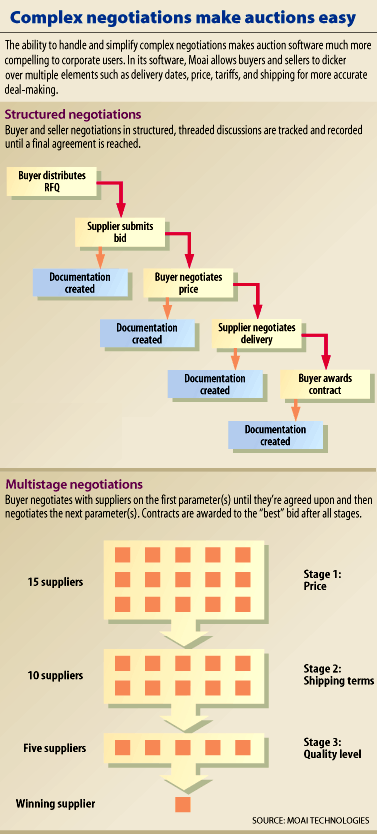
Multidimensional or complex, negotiated reverse auctions are now a daily
occurrence where not only price but shipping, taxes, insurance, and delivery
costs are factored into the deal. Moai's software allows auctioneers to use
two types of negotiation schemas, structured and multistage, depending on
their needs. In some cases, negotiation tools can alert buyers to situations
where the best-priced item is actually a bad choice because of high add-on
costs and ultimately point them to the overall best deal.
A final bit of advice to help make the most of your auction activity: Most
companies use existing business channels when they announce a new online
auction by sending qualified partners invitations to participate. Unlike eBay
and other consumer-oriented auction e-marketplaces, companies that have
established supplier and customer relationships often choose to host a closed
or private auction in which invited participants gain access to the auction
with a user name and password. But companies such as DoveBid can help sellers
target other potential buyers by analyzing historical bidding patterns from
past auctions. Having a larger audience is the best way to help drive up the
ultimate selling costs of your items, so don't cut corners during the
research and invitation stages of auction planning.
Almost every business can benefit from online auctions, whether it be to
regain investment capital in company assets or reduce excess inventory.
Companies will find that auctions provide not only a broadened supply chain
but also a larger marketplace and thus a better chance of moving hard-to-sell
inventory.
Best of all, auction software is starting to mature, making it far easier to
manage the complicated transactional nature of these activities.
Business-to-business auctions are no longer solely the domain of the Fortune
500. With planning, any company can use auctioning to add to the bottom line
cost-effectively and without headaches.
Related
story
Convenient
setup with AuctionBuilder 1.0
Senior
Analyst Lori Mitchell covers Web-based
solutions and technology for the InfoWorld Test Center. Reach her at
lori_mitchell@infoworld.com.
|
BOTTOM LINE
|
|

|
Online auctioning 
BUSINESS
CASE
Online auctions can help companies alleviate excess inventory or
liquidate capital assets, thus recapturing a portion of their investment.
Companies also can begin trading in new sales channels and expand their
exposure to a broader market of suppliers and customers.

TECHNOLOGY
CASE
Several different options for performing online auctions are available,
including existing e-marketplaces, no-fuss hosted solutions, in-house
installed solutions, and in-person auctions with simultaneous Webcasts.
Choosing the right type of solution for the type and volume of your
auction activity will provide the best return on investment. Negotiation
tools are available to add value to buyers' auction experiences.
|
|

|
|

|

PROS
+ Offloads excess and used inventory
+ Opens new sales channels
+ Reduces transaction completion times

CONS
- Some solutions lack integration with procurement systems
- Costs vary widely, depending on type of auction or
provider of auction services
- Increased demand on IT staff for in-house, installed
implementations
|

|
|
|

|

